
Let’s start with a few photos.
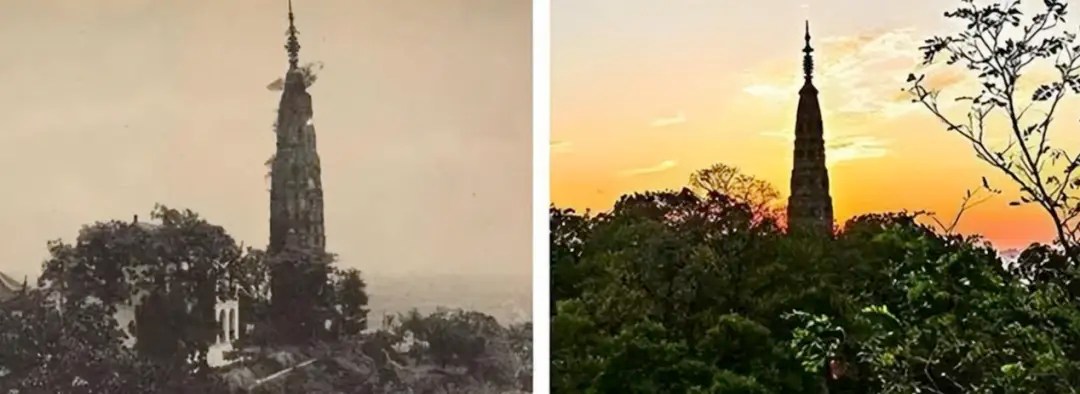
Imagine a West Lake like this—would you still find it lovely?
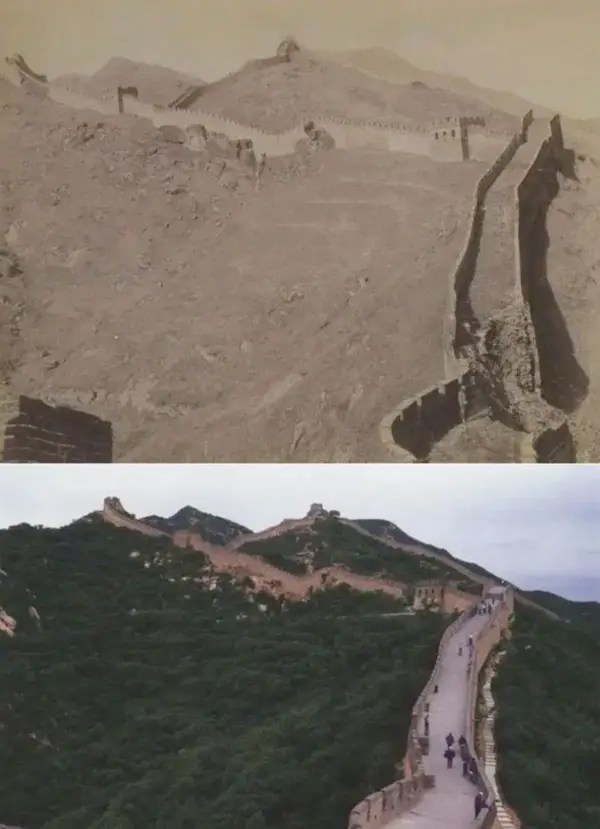
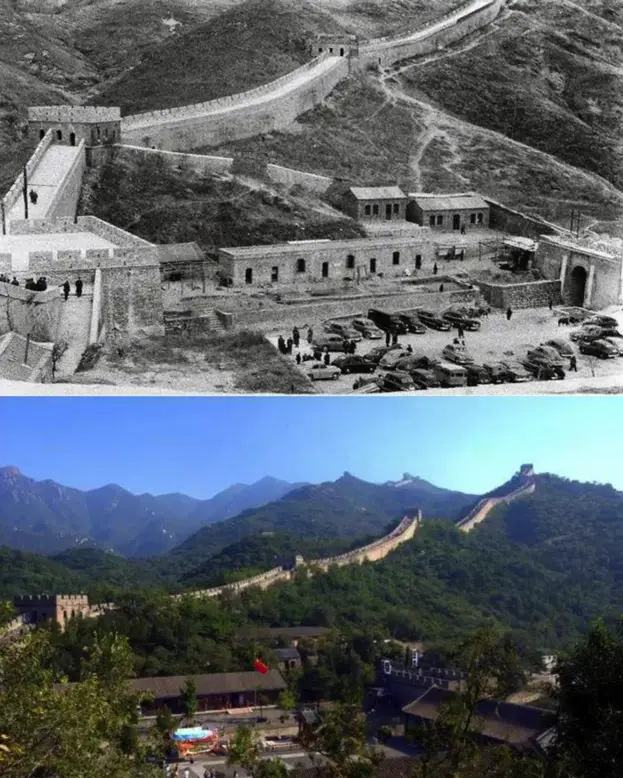
And how about the Great Wall looking barren and lifeless—would you even pay the entrance fee?
Why is everything so desolate and bare? What happened to the trees on the mountains? It’s simple: they were all chopped down. The big ones became timber; the small ones became firewood. Firewood was the most important “technology” of ancient times.
Think about it: without firewood, there’s no fire. Without fire, the staples of life—rice, oil, salt, soy sauce, vinegar, and tea—are all out of reach. That’s why “firewood” takes pride of place in the Chinese phrase “柴米油盐酱醋茶” (firewood, rice, oil, salt, soy sauce, vinegar, tea). No energy means we’re back to survival mode in Minecraft, like contestants on a deserted island reality show.
China’s demand for wood has always been massive. Building houses, constructing palaces, waging wars—all of it required timber. Whether for military supplies, engineering equipment, shipbuilding, or carriage-making, wood was indispensable. As populations grew and wars raged, northern China’s forests were almost entirely depleted.
The photos we can capture today only date back to the Qing Dynasty(1644–1912), but the deforestation started much earlier. By the Tang Dynasty(618–907), northern China was already suffering from a severe lack of trees. According to “Zizhi Tongjian” (Chinese: 资治通鉴, a historical chronicle, literal meaning: Comprehensive Mirror in Aid of Governance), in 904, Zhu Wen dismantled every visible house in Chang’an and floated the wood down the Wei River to Luoyang. Why? Because there was no usable timber left near either city.
By the Northern Song Dynasty(960–1127), they had to travel as far as Tianshui in Gansu to fell trees. Fast forward a bit to the Jin Dynasty(1115–1234): Emperor Wanyan Liang, planning to rebuild Kaifeng city, had to turn to the forests of Liupan Mountain. By the Ming Dynasty(1368–1644), when constructing the Forbidden City, the timber had to be sourced from south of the Yangtze River. During the reign of Emperor Jiajing(1521–1567), they had to go even further—to western Hunan and Guangxi—or simply import wood from foreign countries.
It wasn’t just China. Before Europe’s Industrial Revolution, human activities had also driven forests to the brink of exhaustion. So, what saved the trees in the end? Ironically, it was the much-maligned coal, oil, and natural gas. These so-called “pollutants” replaced wood as the primary energy source, powering the Industrial Revolution and sparing the forests.
Without fossil fuels, how could we have trains, ships, or cars? Would the Industrial Revolution have even happened? The UK and France only began promoting reforestation after coal became widely used. The 30% forest coverage in Europe today is, in fact, a recent achievement—just within the past two centuries.
Closer to home, when my father was a kid, mountain floods were a common, terrifying event. Maybe your parents or grandparents have had similar experiences. But as time went on, deforestation slowed, and we began to see reforestation efforts. Why? Because coal and gas replaced firewood. Those old wood-burning stoves gave way to gas ranges, and the trees finally got a break.
From a cause-and-effect perspective, fossil fuels didn’t destroy the environment; they replaced wood, protected forests, and gave us the lush green landscapes we enjoy today.
Yes, fossil fuels do pollute the environment—but here’s the bigger picture: they kickstarted an energy revolution, fueled technological progress, and ironically, saved vast stretches of greenery on our planet.
Wouldn’t you agree?