
Today is the first day of 2025, and Ariel wishes everyone a Happy New Year! 🎉Let’s talk about a song today—the iconic classic by Michael Joseph Jackson, We Are The World.
I think most people, like me, find the song not only beautiful but also full of compassion and emotional depth. It might even bring you to tears.
But yesterday when I was celebrating the New Year’s Eve, as I stumbled upon the MV again, a question popped into my head: Did this legendary classic make our world a better place—or worse?
1. The Background
The song was created in 1984, when Africa was experiencing an unprecedented drought and famine. The combination of natural disasters and political turmoil led to countless deaths across the continent.
We Are The World was composed and performed to help children struggling in the famine-stricken regions of Africa.
Its creators included Michael Jackson, his legendary producer Quincy Jones, and rising superstar Lionel Richie.
On January 28, 1985, after the American Music Awards, Michael Jackson gathered 45 star singers, including Bob Dylan, to record We Are The World in just one night.
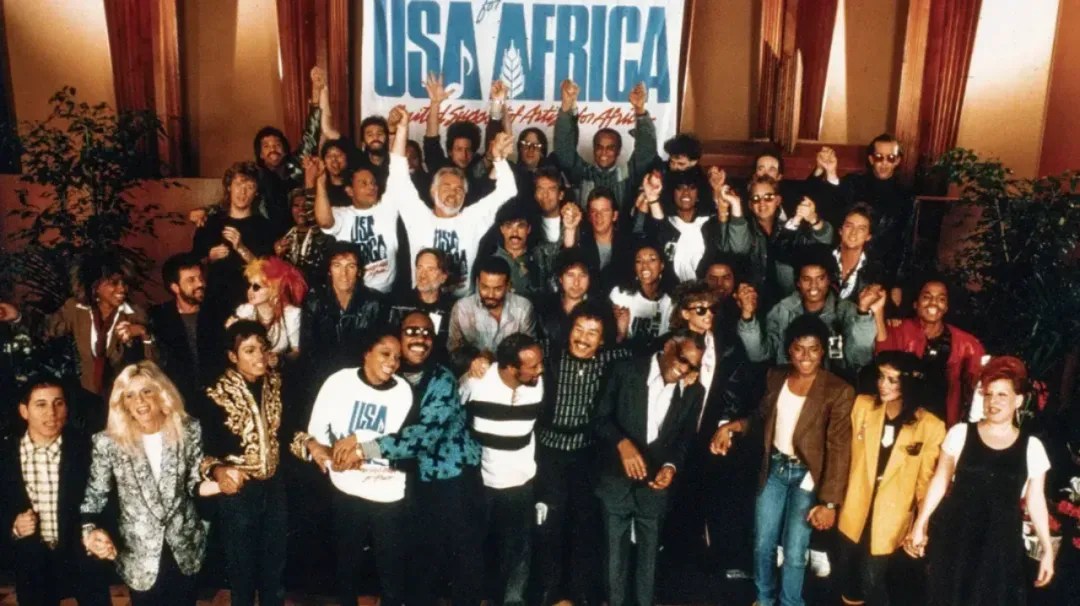
The song was both passionate and deeply moving, spreading the message of global unity and calling on people to save lives and build a better world together.
It was a massive success, raising $80 million in just a few weeks and over $100 million in total. Since then, the song has become a symbol of charity and humanitarianism.
I’ll admit—the ideals conveyed in the song, combined with its powerful humanistic appeal, are indeed touching.
But here’s the more important question: What about reality?

2. Jesse Jackson
Good intentions don’t always lead to good outcomes, and the road to hell is often paved with them. Looking at the real-world impact, We Are The World might not have made the world better after all.
Let’s start with the song’s producer, Quincy Jones.
As Michael Jackson’s producer, Quincy Jones was a towering figure in the music industry, often referred to as the “Godfather of Music.”
The success of We Are The World catapulted both Quincy Jones and Michael Jackson to even greater fame.
But while Quincy Jones made waves in music history, he also played a significant role in political history by fully supporting another Jackson—Jesse Jackson, the famous civil rights leader.
Long before Barack Obama became America’s first Black president, Jesse Jackson was the first Black man to run for the Democratic presidential nomination.
Quincy Jones provided substantial support for Jackson’s campaign.
First, Quincy leveraged his influence in the music industry to raise funds for Jackson’s campaign, not only providing financial backing but also boosting his visibility.
Second, Quincy produced The Jesse Jackson Show, a TV program that gave Jackson a platform to showcase his political views and broaden his influence.
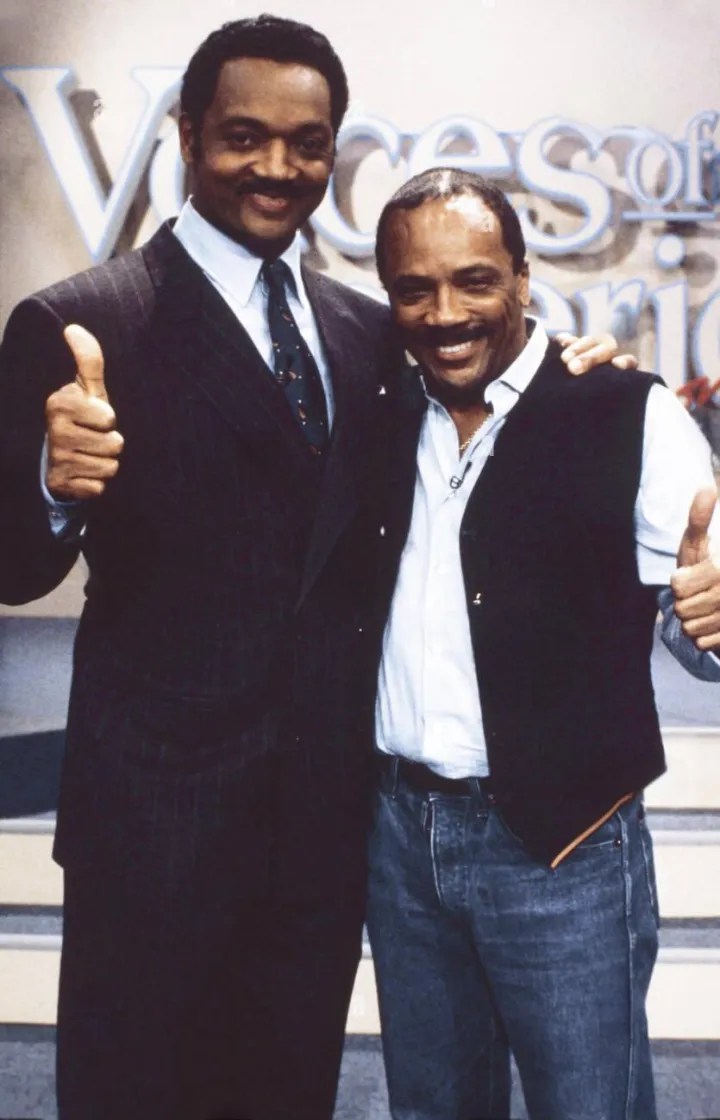
(Jesse Jackson and Quincy Jones)
3. The Godfather of LGBT
Now that we’ve established their connection, let’s take a closer look at Jesse Jackson’s political ideals.
Let’s start with something easy to grasp. Do you know where the rainbow flag, the symbol of the LGBT movement, originated?
That’s right—it traces back to Jesse Jackson, the first Black leader to run for U.S. president.
At the 1984 Democratic National Convention, Jackson delivered his famous “Rainbow Coalition” speech, marking the first time the LGBTQ community was addressed on a national stage.
This moment symbolized the inclusion of LGBTQ people in mainstream politics and their eventual alliance with the Democratic Party.
Under the leadership of the Rainbow Coalition, Jackson actively participated in various social justice movements, advocating for racial and economic equality as well as gender and sexual diversity.
In short, Jesse Jackson, backed by Quincy Jones, became a pioneer of today’s LGBT movement.
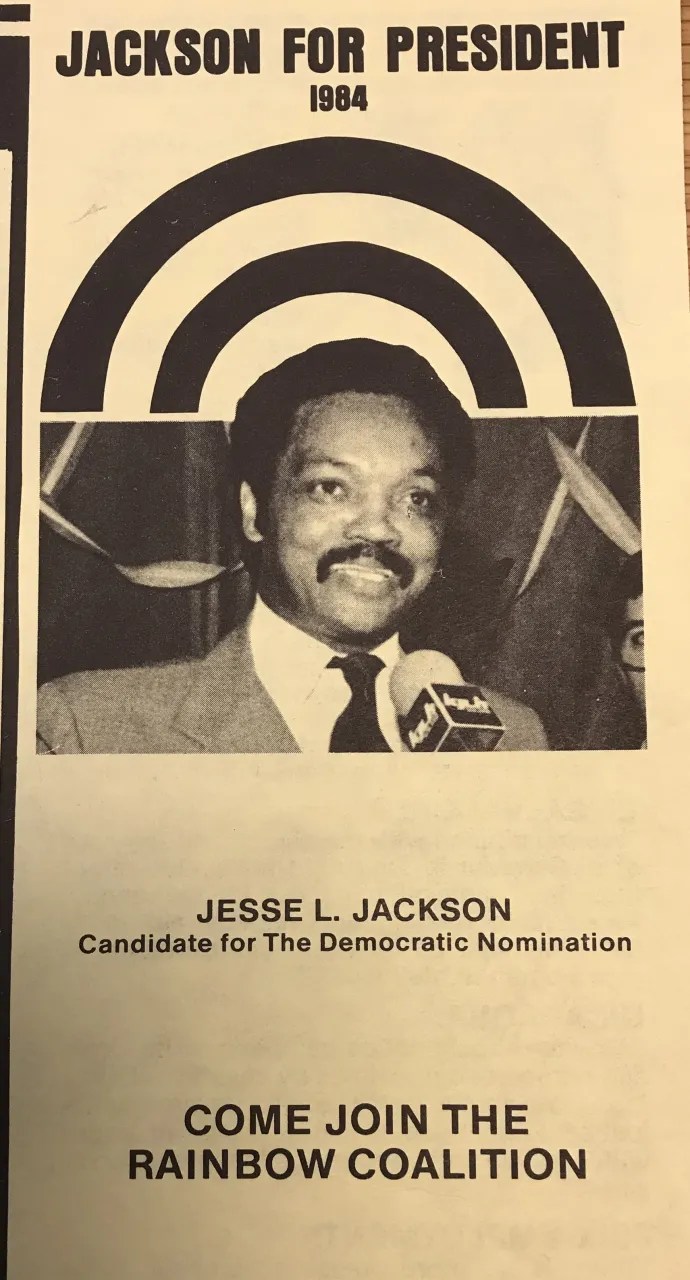
(Jesse Jackson and his Rainbow Coalition)
Over time, the LGBT community rose to prominence in politics, with the Democratic Party pushing forward LGBT rights legislation and promoting gender diversity.
Although Jesse Jackson failed to secure the presidential nomination twice, his influence, amplified by Quincy Jones, made him one of the most impactful Black leaders within the Democratic Party.
By 2007, Jackson publicly endorsed Barack Obama, a pivotal moment among Black leaders that helped Obama gain recognition and support within the party.
Not only that—Jackson’s son played a key role in Obama’s campaign team, while his daughter became close friends with Michelle Obama.
It’s safe to say that Obama’s historic presidency as America’s first Black president was made possible, in part, by Jesse Jackson’s groundwork and Quincy Jones’s contributions.
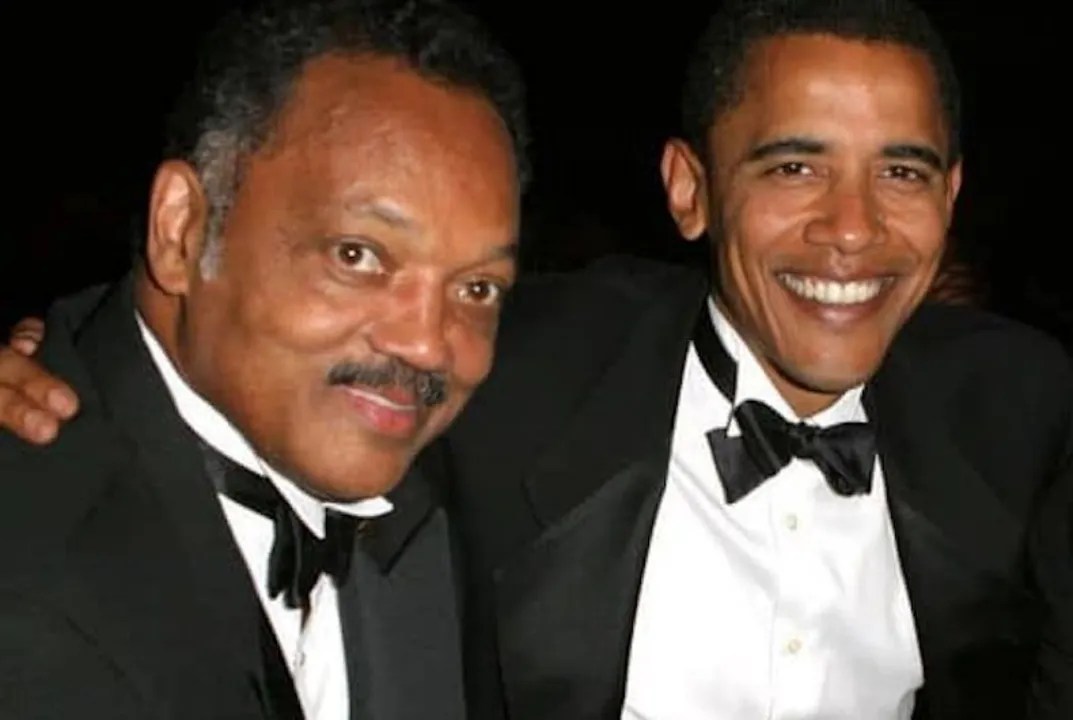
(Jesse Jackson and Barack Obama)
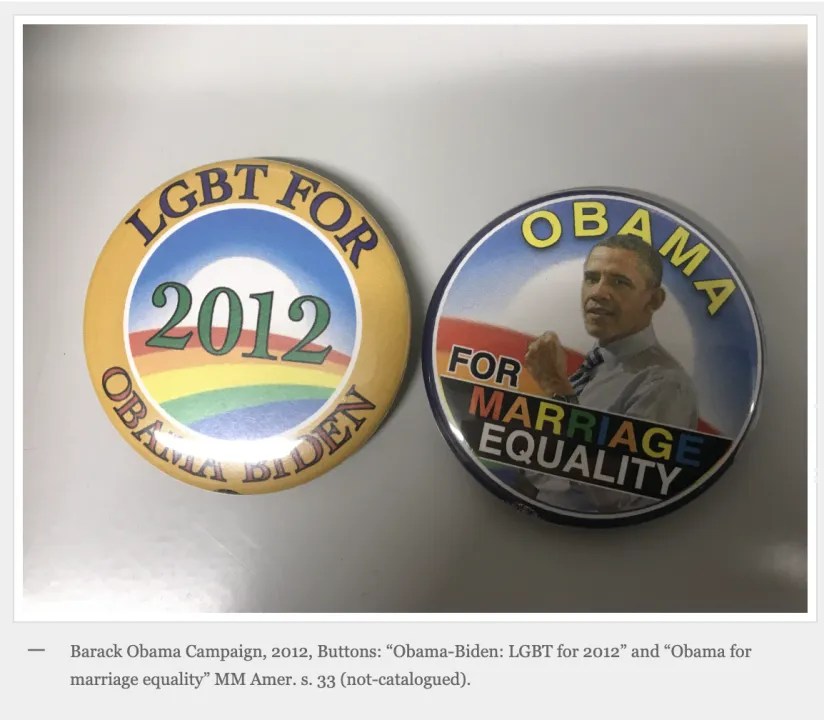
Of course, Quincy’s support also played a significant role. And the story doesn’t stop there. Obama became the first U.S. president to publicly support same-sex marriage, ban discrimination against LGBTQ employees in federal departments, and protect LGBTQ workers’ labor rights.
Add to that the Affordable Care Act, more education support for Black communities, and the rise of movements like “Black Lives Matter” and… let’s not forget the infamous “smash and grab” (a.k.a. looting).
4. People Who Changed the World
On November 3, 2024, Quincy Jones passed away at his home in Los Angeles at the age of 91.
Throughout his life, he won 28 Grammy Awards and was named one of the most influential musicians of the 20th century by TIME magazine.
He was hailed as a “master of changing the world” and a “great man.”
Indeed, he changed the world. But the question remains—did he, and his music, make the world better or worse?
That’s the question. What’s your answer? As for me, the answer is clear: What truly makes the world The World—a united and thriving place—is free trade, not charitable donations.
Looking to the future, I remain cautiously optimistic and believe tomorrow will be better.
But to make tomorrow better, we need the right ideas and logical foundations, not just a philanthropist’s goodwill.
Finally, Happy New Year my friends! Stay tuned and let’s spread the ideas of the Austrian School of Economics in 2025!
References
Vaughan, D. (2024, December 10). We Are the World. In Encyclopedia Britannica. Retrieved from https://www.britannica.com/topic/We-Are-the-World
De Loera-Brust, A. (2024, December 9). Jesse Jackson’s America First. Retrieved from https://www.compactmag.com/article/jesse-jacksons-america-first
Borosage, R. (2024, December 25). Jesse Jackson 1988 Presidential Campaign. Retrieved from https://www.influencewatch.org/political-party/jesse-jackson-1988-presidential-campaign/
KT. (2024, December 25). Quincy Jones. Retrieved from https://essentials.neh.gov/about/awards/national-humanities-medals/quincy-jones
Jordan, J. (2022, November 1). How Jesse Jackson changed America. Retrieved from https://www.newstatesman.com/archive/2022/11/from-the-ns-archive-next-time-the-rainbow
Nichols, J. (2023, July 14). Jesse Jackson’s Politics of Peace. Retrieved from https://www.thenation.com/article/politics/jesse-jackson-peace-candidate/
Rozzo, M. (2024, November 4). Music Impresario Quincy Jones, 91, Is Dead. Retrieved from https://www.vanityfair.com/style/story/music-impresario-quincy-jones-91-is-dead
Waxman, O. B. (2024, January 29). The History of the We Are The World Song. TIME. Retrieved from https://time.com/6588802/netflix-doc-greatest-night-in-pop-we-are-the-world